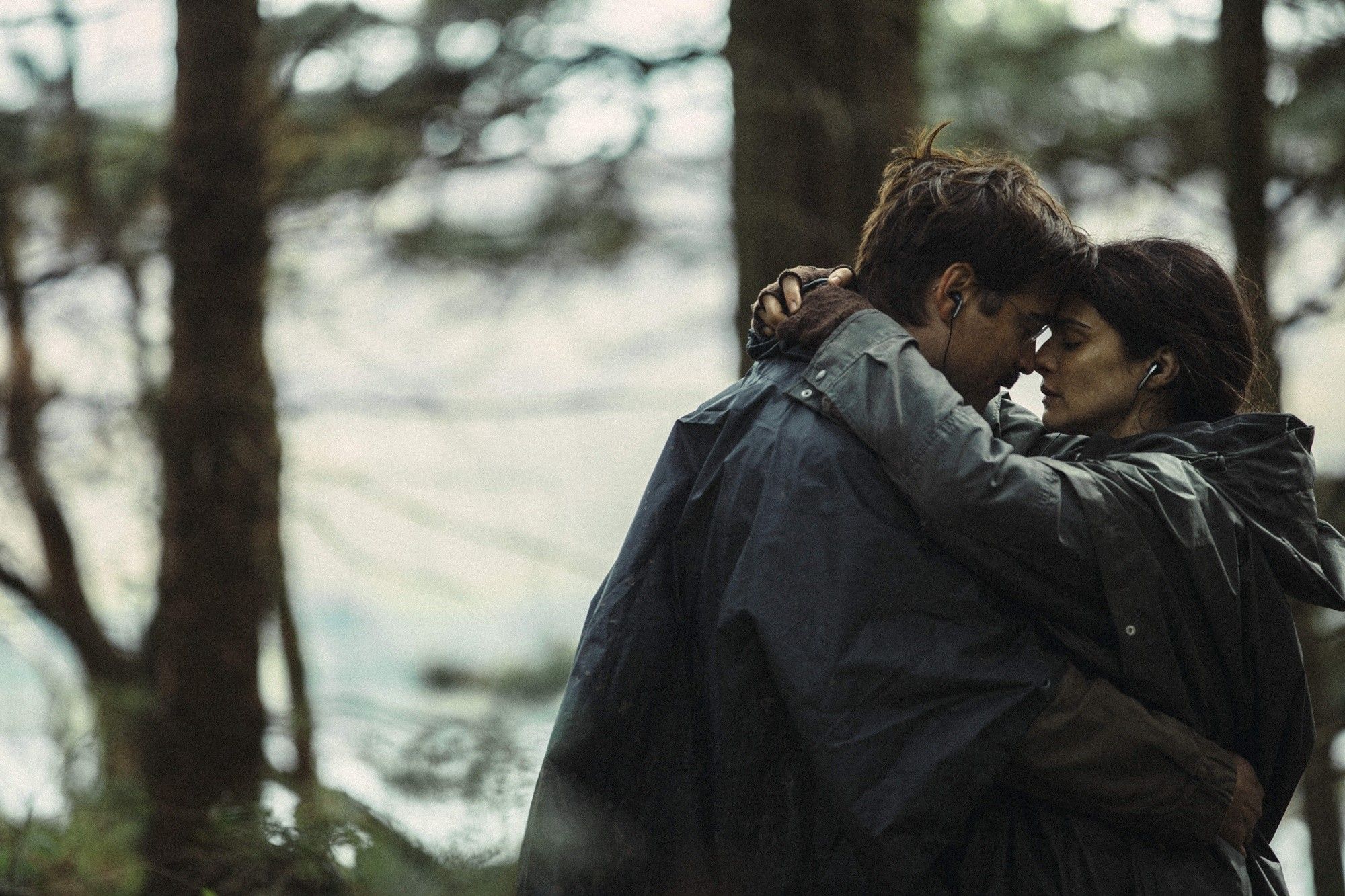
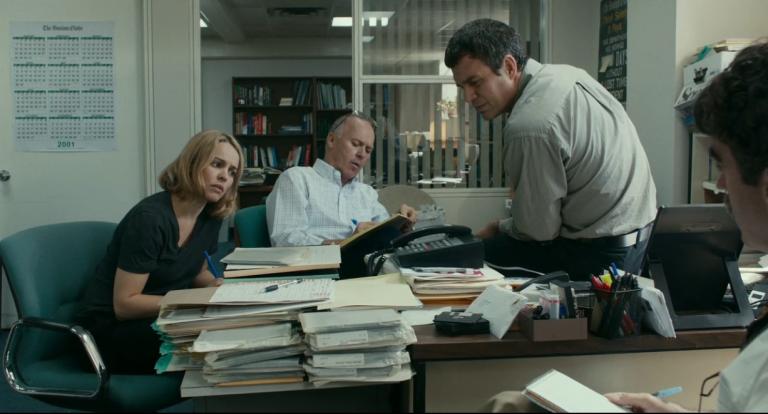
一樣先講結論,金都係一部格局好精細的電影,結構好工整。同幻愛比較,我會話幻愛拍得隨意啲(唔係求其),鏡頭畫面靚啲,金都的節奏就比較流暢有效率,每一個鏡頭都有想表達的意思。Meta啲講,金都的拍攝風格反映住佢描繪的香港都市,即快捷有效率,毫不浪費每一分鐘的生活。部戲的主題好鮮明係講婚姻與自由,而佢既symbolism係好直接咁呈現(例如隻烏龜、金都商場、旗袍同無腳鳥的比喻),好似一篇IB Paper 1的文學分析。睇完部戲後,我靜係諗起西西既《感冒》同My Little Airport 既《我在暗中儲首期》,因為同樣主題已經有唔少作品探討過。所以部戲既長處亦係佢短處,我始終鍾意幻愛多過金都,就係因為幻愛留比觀眾多啲想像空間,而金都僅僅係講好一個故事。當然橋唔怕舊,金都好睇之處係呈現主題既手法。
必須承認,我入場既時候係抱著一個「估劇情」既心態,一黎睇之前見到有朋友話要留意細節,二黎因為此戲有著幻覺 \ 精神病既背景,所以不斷提醒自己唔好信劇情,期待一個「so it’s all an illusion」既反轉。冇錯,部戲係有運用此類元素,借一個作為unreliable narrator既精神病人阿樂敘事,令觀眾懷疑有幾多情節係可信的(例如有冇戴手繩、個counselling session係咪發夢等等)。但無可否認,呢啲都唔係此戲既重點,用我呢種心態睇到最尾唔會真正享受到個故事。
The 2017-2018 Oscars race has been called the most unpredictable one in recent times by many Oscar prognosticators. Frankly, most years since the implementation of the preferential ballot in 2009 have been wild, and the last two years saw the surprising yet justified triumphs of Spotlight and Moonlight over The Revenant and La La Land respectively. But the 2,000 new Academy members have made this an especially tempestuous year. The top prize seems to be between The Shape of Water (PGA, DGA winner) and Three Billboards outside Ebbing, Missouri (SAG, BAFTA winner), though the buzz for Get Out and Lady Bird is very much alive. Sadly, unpredictable doesn't necessarily translate to exciting – the Best Picture frontrunners don't reflect how great cinema was in 2017.
Here's my ranking of the Best Picture line-up:
9. Three Billboards outside Ebbing, Missouri
A few months ago, I left the theater feeling ambivalent after seeing Three Billboards, and that ambivalence has grown to strong dislike. I find myself totally disagreeing with how the film handles its character arcs, and it's not just a storytelling flaw – it tells a fundamentally reprehensible message. The film flows fluidly but the style is nothing noteworthy, and the eponymous town does the exact opposite of 'the city functioning as a character'. I do concede that there is one great storytelling decision in the middle, but that is far from able to save the film for me.
8. Darkest Hour
Darkest Hour is the obligatory, standard Oscarbait. It definitely didn't need to get into Best Picture to win Gary Oldman his long-awaited Oscar, but it's not difficult to sit through. Its depiction of the Miracle of Dunkirk is staggeringly lackluster compared to Dunkirk's, but cinematography (that opening shot!) and score elevate this otherwise dull and painless film.
7. The Shape of Water
There is so much I love about this film – its beautiful lead performance, its celebration of minorities, its stunning ode to cinema. But The Shape of Water doesn't love love itself; for how much the fairy tale revolves around love, its central romance feels detached, insipid, and ultimately unemotional. It constantly impressed me but it never for a moment moved me. Guillermo del Toro clearly loves cinema more than love; love just gets buried under the glitz and glamor of the mise-en-scène.
6. Lady Bird
Rarely does Hollywood make a coming-of-age film that embraces yet also defuses the tropes that go with the subgenre, and even more rarely does Hollywood make a film so real, lively, and lovely. Greta Gerwig could've been more confident behind the camera – her direction feels just slightly too hesitant – but there's more than enough to make this movie special.
5. The Post
On paper, The Post is as Oscarbait as it gets, but there's no denying how solid this film is. It's not as stunningly heartbreaking as writer Josh Singer's previous effort Spotlight, but it retains Spotlight's powerful conciseness, now upgraded with Spielberg's always reliable direction. Much like Spotlight, it breathes and flows like a good piece of journalistic writing, with delightful Spielbergian accents of thriller added on top.
4. Get Out
Get Out is by far the best screenplay of 2017. It's wickedly clever, overflowing with ingenious details, and hauntingly relevant. Peele's direction is more than serviceable; as a first-time effort, it's shockingly good. But what people should really be talking about is Daniel Kaluuya's rightfully nominated powerhouse of a performance – his eyes will now be forever ingrained in the history of cinema.
3. Call Me by Your Name
Many have called Call Me by Your Name a picturesque postcard, and yes, it is unbelievably beautiful. (What other postcard in the world has Sufjan Stevens songs to go with it?) But it's also so much more than that – its casual style smoothly translates international cinema for American audiences, its undercurrent of tension in a carefully chosen time period renders it a solid entry in the queer canon, and its world-building is so breathable. Like The Shape of Water, it's a romantic fantasy, but its romance is so much more heartwarming and heartbreaking, ethereal and transcendent. And it's so seemingly effortless.
2. Phantom Thread
This movie is insanely good. Insane, because so much of it seems downright bad. Daniel Day-Lewis plays a character called Reynolds Woodcock and his performance isn't even the best one in the film. It juxtaposes literally laugh-out-loud comedy with a ridiculously self-indulgent score by Jonny Greenwood. You might think it's that boring British period drama with lavish costumes, but its story is more akin to Fifty Shades than Shakespeare in Love or The English Patient or The King's Speech or whatever else. All of this works, sublimely, thanks to the genius of Paul Thomas Anderson. Thank God it got its six surprise nominations, even though PTA didn't give a tinker's fucking curse about campaigning.
1. Dunkirk
Unsurprisingly, a Christopher Nolan film is my #1 (even though I'm torn between #1 to #3 and they are easily swappable). Of course, it has all the trademark complexities of a Nolan screenplay; he was never going to make your standard WWII drama (i.e. Darkest Hour). But those who complain about Nolan's films being 'lifeless' can finally shut up, as Dunkirk is not only a brilliant piece of visual storytelling, it's also human, universal, and uplifting – words not commonly associated with a Nolan film. When the score dwells and Kenneth Branagh's eyes well up, I felt a sense of empathy I've never felt before. It's a glorious film that not only captures but also embodies the Dunkirk spirit.
The other categories from directing to acting seem pretty locked up. Best Original Screenplay is a bloodbath between the same Best Picture frontrunners, though Get Out clearly should win. Below-the-line is where it gets interesting – will Roger Deakins, finally, get his most overdue recognition for cinematography? Will Greenwood's luscious, 60-piece score triumph over Alexandre Desplat's work? Will the Apes trilogy at least get a consolatory prize in visual effects? What about the frontrunner-less Documentary and Foreign Language categories? And don't forget the most unnoticed battle in Best Original Song between Coco's heartstring-tugging "Remember Me", The Greatest Showman's pop-theater earworm "This is Me", and the aforementioned "Mystery of Love" by Sufjan Stevens.
2017 had great arthouse cinema (A Ghost Story, The Florida Project, BPM), blockbusters (Star Wars: The Last Jedi, Logan, etc.), and those in between (Blade Runner 2049). I mourn their snubs, yet the nominations aren't bad at all, especially in terms of diversity, from race (Get Out) and gender (Rachel Morrison) to gender identity (A Fantastic Woman). Let's not get ahead of ourselves and self-congratulate too soon. Who knows what kind of nominees would Hollywood-in-turmoil produce in 2019?
There is intense pressure for Star Wars: The Last Jedi not to be merely good, but to be culture-defining great. The Force Awakens exceeded everyone's expectations with its behemoth $900 million gross and 93% Rotten Tomatoes approval score, yet also fell in line with everyone's expectations by playing it utterly safe. Rogue One was a premature film with a split personality disorder. Everyone has been waiting for supposed auteur Rian Johnson to pull an Empire Strikes Back.
He pulled an Empire and is likely going to upset the fans. Much like Empire, this film is all about subversion.
Setting aside the mythos that everyone's so concerned about, I must first note that this film looks downright impressive. Fanpeople (not just fanboys, of course) of established IPs like Star Wars tend to scrutinize every minute detail in their beloved universes. A brief visit to the (in)famous Wookieepedia shows the fans' utmost attention. That makes it easy to neglect the audiovisual aspects of Star Wars. The franchise is, undoubtedly, the most cinematic franchise in film, effortlessly beating other properties such as Harry Potter, James Bond, and the MCU (incidentally, all based on books). After all, the 1977 original reinvented cinema, and the prequels did that again with digital cinematography. Thus, it is a shame that so many fans single-mindedly speculate on this-or-that character's background; it is also a delight that The Last Jedi is a cinematic triumph. The visuals are amazing. Johnson triumphs by visualizing and staging plot elements that sound cheesy on paper with stunning dramatic and even erotic tension. Intertextual references are there, but aren't just there for fan-service. Shots that stick with you due to memorable composition or color are more than there to count. The Atmos sound at my theater was used to its fullest extent, so was the absence of sound in a notable scene. It's not just technically good, but also creative, alluring, and superior to Abrams' antecedent work.
However, what everyone has been painstakingly awaiting is the story, or more precisely, the expansion of the mythos. Johnson took some wild turns that are certain to be divisive. In fact, The Last Jedi can be perfectly encapsulated in one word – subversion. Everything in its story is about being subversive. From individual plot events and reappearances of long-lost beloved characters to overarching themes of the entire film and saga, everything is first shown in one way, then unmasked, twisted, or reinterpreted in another. Johnson literally takes stuff established by Lucas and Abrams and tosses them out of the window for meta comic relief. It is "daring" and "bold", everything we desperately wanted this middle chapter to be, but one must question: at what cost does this daring and boldness come?
To defy audience expectations, especially in a franchise as established in its popular mythology as this one, is a noble and commendable move. Don't fret, this is not for cheap shock value. Many of these twists and turns are tied to Johnson's thematic ideas – subversion itself is one of the film's core themes. Yet, I see a filmmaker dangerously obsessed with subversion, pursuing it with such tenacity that creates serious ramifications for the franchise. Johnson has done it too mercilessly and relentlessly. In fact, one of the film's most orgasmic moments comes from not cutting away and following the audience's expectations. Is it really necessary to subvert everything we know and everything we expect about the Star Wars universe? How does The Last Jedi fit into the saga? To be a bold and daring film on its own is one thing; to be a bold and daring and also a second-in-a-trilogy, eighth-in-a-9-part film is another. The Last Jedi has upset the established order. It has taken away the structural congruity and classicism of its predecessors. When I put on my critic's hat, subversion is something I welcome and embrace; but when I put on my fanboy's hat, I cannot help but worry that Johnson has done something harmful and almost irreverent. In a universe so contingent on mythos and backstories, how can a saga entry exist without providing us with the answers we crave? More importantly, how can a director point at us, tell us they're not important, and confront us with our (heck, even Abrams') pointless fanboyism? This picture directly challenges its hardcore audience who might not take it up well, though the series of subversion is ultimately meaningful in its thematic and narrative purpose. Its meta humor is at least better than the superficial and inconsequential meta humor of recent self-aware flicks like Deadpool and Moana.
Other aspects of the storytelling, though flawed, are mostly enjoyable. The structure is an oddball – there are surprising traces of the elegant simplicity of Mad Max: Fury Road, but also puzzling hints of the convoluted cross-cutting of the dreaded prequels. The film seems to have four acts and there are multiple instances of "here it should end", only for it to go on longer. This is less of an issue of extraneous fat, more of an issue of poor pacing. Contrary to popular opinion, I did not hate the subplot; I found it acceptably stupid and distracting and yet another of the film's many courageous subversions. The comedic tone might, again, upset fans, but it was charming and was mostly ignored by my fellow audiences anyway. The character work will also leave the fans divided. What Johnson has done to the titular last Jedi (singular or plural, interpret it as you wish) is arguably blasphemous but profound. It gives some much needed depth to our blank-state saviors and churns out layered performances by Mark Hamill and Daisy Ridley. Powered by John Boyega and Oscar Isaac, Poe and Finn go through and learn a lot, and their homoerotic tension is at an all-time high; what a shame that the film sweeps that aside. Kylo Ren transforms from the most promising character in The Force Awakens to the most complex one in The Last Jedi, thanks to Adam Driver's gravitas. Lastly, while I do have some reservations regarding Princess Leia's arc, I don't blame the film at all, given the tragic circumstances of Carrie Fisher's untimely passing.
Porgs. They steal the show.
In short, The Last Jedi is great, but not a crowd-pleasing instant classic. Within the franchise, it's a damaging masterpiece. It's more than just blockbuster filmmaking at the highest level. Its audaciousness flows from the mise-en-scène to the story. It's even more admirable that Johnson accomplished this in spite of the ongoing disarray at Lucasfilm. Now that Johnson's burned everything down, it's worryingly up to Abrams to rebuild what's left of the Skywalker saga, and let's hope he injects some of Johnson's audacity into the safe and classic filmmaking we all know he's so familiar with.
One of the most remarkable cinematic experiences in my life was watching Blade Runner: The Final Cut on the silver screen. When Blade Runner 2049 ("2049")was announced, much like everyone else, I was hesitant; when Denis Villeneuve and Roger Deakins were announced to be director and director of photography, my hesitance was immediately replaced with hype. For almost two years, I was anticipating a sensory return to the Blade Runner universe.
That was my grave mistake in approaching 2049. 2049 is not Blade Runner.
To explain this, I must first offer a description of what the Blade Runner universe is, even though it cannot be encapsulated in mere words. The defining characteristics of the Blade Runner universe are otherworldliness and ethereality. The architecture, geography, and physics of that cityscape do not make sense. It exists in a dreamlike state. Watching it must be what it's like to take drugs. Combined with Vangelis' synthesizers, each image wows the audience with its visual splendor, yet simultaneously makes you question reality. The audience is totally immersed in 2019 Los Angeles. The cinematic experience of watching Blade Runner is not replicable.
But I had foolishly thought it was, so I went in to 2049 looking forward to revisiting the world of Blade Runner. For the first half of the film, I was disappointed. Deakins' cinematography is unquestionably sublime, but it is not Blade Runner. Too clean, too sleek, too Apple-like, I thought. Too little synthesizers. Aerial shots of the city are a tad too high. The LAPD headquarters looks nothing like its former chiaroscuro-lit church-like version. There are occasional glimpses of that world, but I could not fully thrust myself into the 2049 universe.
Until I reached the mid-point of the film, when the film transports itself to the orange landscape featured in all of the trailers and posters. It was a moment of revelation. The revelation that 2049 is not trying to be Blade Runner, and has no interest in revisiting that unique, once-in-a-lifetime, unrepeatable world, unleashed me and allowed me to appreciate the sequel as a different and its own beast.
That is what the best sequels do. The metropolitan Chicago of The Dark Knight is nothing like Kowloon Walled City-inspired slums of Batman Begins. The clock tower in Harry Potter and the Prisoner of Azkaban doesn't exist in the first two; it magically appears out of nowhere and just assumes the audience's acceptance of its existence. The best sequel-makers know better than to replicate the world of their predecessors. They continue the saga not in semblance but in spirit. 2049, from its opening sequence to its final moments, shows its clear intention to steer clear of making a replica of Blade Runner. It shows an even clearer intention in continuing the spirit of Blade Runner by asking its core question – what does it mean to be human? – in even more provocative and reflective ways.
We all know Blade Runner, as much as it is about AI, technology, society, dystopia, and its other sub-themes, is essentially about what it means to be human. Thankfully, writers Hampton Fancher and Michael Green and director Villeneuve understand this, and take this to a better and more advanced level. As good as Blade Runner is, it is merely a classic hard-boiled detective film noir story, wrapped in a dystopian sci-fi setting, that happens to touch on this theme. 2049, regrettably loses its film noir elements, but asks the core question demonstrably and unwaveringly. Protagonist K's character arc is a beautiful story of humanity and free will. It is an expanded and enhanced yet still refreshingly surprising and subversive version of Roy Batty's arc. Although plot conveniences do exist, they matter the least in the grand scheme of things. Another flaw is the somewhat clichéd suggestion of an even grander scheme of things, in stark contrast to the distinct modesty of Blade Runner's narrative. Regardless, this is a story worthy of Shakespearean theatricality, thematically sound and satisfying, and succeeds Blade Runner in spirit. In comparison, the story of 2049 is more fully-fledged and multi-dimensional, truly "deeper" and more profound, yet still about the same set of ideas, and told in a way that is on par with Ridley Scott's way.
This beautiful character arc is played by Ryan Gosling, who delivers an Amy-Adams-in-Arrival level of performance. He effortlessly carries the whole film on his shoulders, and each little tic and gesture expresses his struggle of his nature. Harrison Ford returns to the role of Rick Deckard and delivers a performance similarly competent to his in Star Wars: The Force Awakens. The supporting cast performs exceptionally well in roles that are designed to be ambiguous in nature. This kind of characterization would not work well in any film except this. Almost every character represents a different shade of the human-replicant spectrum. The characterization is dangerous and risky, and succeeds largely due to the excellent performances that bring it to life.
However, the music, which is one of Blade Runner's strongest fortes (if not the strongest), is a severe disappointment. I was aware of the risks of emulating Vangelis' saxophones and synthesizers. Hans Zimmer and Benjamin Wallfisch had a very fine line to walk, and they sadly took a misstep. Gone are the serene melodies of the main theme, the love theme, and the end titles. They are replaced by the oh-so-familiar Zimmer industrial howls and growls. Whenever synths come in, I get a little sense of joy. It was a wise decision to reference Vangelis' material sparingly, but took away the effect of all the new material. Vangelis is referenced in a crucial, cathartic moment of cogitation. Yet it will remain the only memorable music moment. (On a side note, I lament the firing of Jóhann Jóhannsson. His incredibly atmospheric Arrival scorewas a good sign of what was to come and what has since been lost.)
My philosophy of cinematic art is that perfection and abstraction oppose each other on different ends of a spectrum. A film poses far-reaching, open-ended, suggestive questions at the expense of structural completeness. The verdict is 2049 is close to perfection. Even though the failure and/or absent attempt to revisit the original's universe, aesthetically or musically, continues to feel like a sore missed opportunity – an itch I can't scratch – the rest of the film is done in a spectacularly well-executed fashion. Yet, Blade Runner has never been a perfect film, and it is the very imperfections – the suggestiveness of its far-reaching, open-ended ideas – that I embrace. This once again confirms that 2049 is not Blade Runner, and I should let it stand on its own perfect might.
Many know me as a member of writer/director Christopher Nolan's devout fanbase that has made him one of the select household-name directors prolifically working today. While that is admittedly true, my fanboying has significantly diminished in recent years. Like many, I have my fair share of qualms about Nolan's sci-fi epic Interstellar, and have become increasingly aware of the flaws of his work. In return, my appreciation of him has become more balanced and well-rounded, and I still hold deep respect and admiration for who is essentially this generation's iconic auteur. Naturally, I was very excited for his latest release Dunkirk, especially after seeing the glowing reviews. The surprisingly short runtime was also a breath of relief. My expectations were high but managed, as I tried to learn as much about the film as possible without delving into spoiler territory.
Needless to say, my expectations were met. The visceral thrills this movie provides are matched only by this decade's best blockbusters – Gravity and Mad Max: Fury Road. (In my opinion, these two movies, especially the latter, are as close to perfect as it gets.) Similarities between these three movies abound; they are all non-stop roller coasters from start to finish. Nolan provides sparse dialogue and brief rooms to breathe before he throws you right back into the spectacle. And the spectacle works very well. The harrowing film recreates the dreadful atmosphere of war, without needing to delve into what is now called "war porn" – spilled intestines, rampant shrapnel, and demonic enemies. "War porn" was pioneered by Saving Private Ryan and most recently exemplified by Hacksaw Ridge, but Dunkirk is more akin to the pure survival/horror of Gravity and action/adventure of Fury Road. This subversion of genre tropes and violence that is not seen but felt are Nolan's leading accomplishments.
However, what Nolan adds on top of Gravity and Fury Road is his director's trademark – non-linear storytelling paired with cross-cutting editing. From breakout hit Memento to personal favorite The Prestige, almost all of Nolan's films feature some form of non-linear storytelling. This originates from Nolan's fascination with how the cinematic medium manipulates temporality, and is well-experimented in Interstellar on the basis of relativity. The experiment continues, this time in fully-fledged feature-length form, to both benefit and detriment. Dunkirk is divided into three timelines – the mole, the sea, the air – that start at different points and converge at the very end. This approach is arguably necessitated; otherwise, Tom Hardy would only have 5 minutes of screen time. Showing certain events not once but thrice also reinforces some of the film's themes, such as the repetitive, hellish experience of the soldiers and the elaborate effort needed from all three parties to coordinate the miracle of the evacuation. On top of that, the convergence (i.e. the entire third act) is done beautifully and comes to an emotionally satisfying crescendo. However, the non-linearity is hampered by the editing. Non-linear narratives, especially ones as intricate and convoluted as Dunkirk, create unavoidable confusion, and a key part of the editor's job is to lessen the confusion and smoothen the audiences' viewing experience. Editor Lee Smith's work leaves much to be desired, as he does not help the audiences piece the puzzle together. There was one point when I felt the editing almost butchered the cleverness and brilliance of Nolan's presentation of his themes through the structure. I also had issues with the editing in Interstellar – this seems to be a worrying trend.
Another major point of criticism, other than the non-linear storytelling, is the supposed "lack of character development" and resultant "disconnection with the viewer". I found myself deeply engrossed by the drama and felt nothing but gripping connection. The lack of character backstory is another welcome subversion of genre tropes and contributes significantly to the unstopping tension and authenticity of the film. It never made me care less for the characters. There is no love story backdrop in the vein of fellow disaster flick Titanic. What I see in Dunkirk is hundreds of thousands of people facing an insurmountable challenge and near-certain death. Their struggle, in the face of such overwhelming calamity, is palpable. As Mencius would have noted, it is the human instinct to care for them. I am alarmed by all these reports of "disconnection" with the characters, for these viewers must be stone-cold and devoid of empathy. I was also very moved by the third act when the Miracle of Dunkirk happened, and it had nothing to do with my British passport. Patriotism is indeed heavy, but the emotional reassurance that comes with the glorious yet bittersweet ending easily and universally warms the hearts of audiences worldwide.
The sound of the film is also noteworthy. By no means a historian, I was very pleased to read reports of how accurate the sound effects of the planes were. The second presentation of Dunkirk I saw featured absolutely earth-shattering sound which put audiences right on the shore, at the sea, or airborne. Watching the film was truly an experience that attacked every inch of all the senses. I was also intrigued but ultimately approving of Nolan's use of the score. Almost every second of the film features Hans Zimmer's score. While many have complained since Interstellar that Nolan overuses the score to cheaply manipulate the audiences' emotion, I found his placing of the score more of a thematic statement than a suspension device. However, I was letdown by Zimmer's score itself. Withleitmotifs found only sparingly, it is certainly no masterpiece à la Inception and Interstellar. The central theme, "Supermarine", is great work but merely standard fare from Zimmer et al., and negatively reminiscent of "Mombasa" from Inception. The emotional high-points are heightened not by Zimmer's original work but by Elgar's famous (and arguably overused) "Nimrod". I do understand Nolan and Zimmer's use of Elgar's work – "Nimrod" is indeed the quintessential British piece, and it would be pointless to try to emulate Elgar. However, this lack of originality severely detracts from the score. Most of Zimmer's work is atmospherically haunting and complements the film appropriately, but hardly stands on its own.
Other aspects such as Hoyte van Hoytema's cinematography and Nathan Crowley's production design are brilliantly spectacular and accurate yet never distastefully glorifying or glamorous. The cast works harmoniously, and I was particularly impressed by heartthrob Harry Styles' charismatic acting debut. It is these performances, not clichéd backstories, that flesh out characters. Dunkirk is a superbly crafted sensory experience and a fascinating albeit occasionally troublesome cinematic experiment. Has Nolan cooked up a flawless concoction of his ambitious vision and daring execution? Almost, but not yet; this film is within an inch of being his magnum opus. There are conspicuous shortcomings, but they can be forgiven, as Nolan has created a tour de force that fills the eye with spectacle, the mind with profoundness, and the heart with sentiment.
It is now a few hours before Hollywood's annual circlejerk extravaganza, and I've watched 7 out of the 9 Best Picture nominees, and 21 nominated films in total. This is my sixth year following the Oscars, and it's been the most boring year for me – 2011 was the worst in picture quality, while I found 2012 and 2013 to be quite exciting races. Last year, thankfully, saw the justified triumph of Spotlight over The Revenant which I disliked very much. However, this year, a repeat of that seems unlikely – upsetting the unstoppable La La Land seems like an impossible task even by critics' darling (and personal favorite) Moonlight.
Out of the 9 BP nominees, I've seen 7, and here is my ranking of them:
7. Hacksaw Ridge
No one can deny the technical brilliance of Hacksaw Ridge. The battle sequences are widely lauded as the best ones since Saving Private Ryan, and I respect the grittiness in portraying such brutality of war. However, I also did not pay to sit through 45 (or more) minutes of mawkishly sentimental first-act drama, nor did I expect to see such rampant and odd religious imagery. I feel misled by the marketing, and probably would have nothing against them if someone warned me about them in advance. Well, the director's name should have.
6. Hidden Figures
This is the feel-good type of Oscar bait. Yes, it undoubtedly arouses joy, but I can't find much to say about it or its crafts. Its historical significance is not to be looked over, but I was also disappointed to see that much of the history behind was also significantly modified to fit the film's political agenda. I support anti-discrimination against both women and African-Americans, but I do not support misleading 'based on true events' moviemaking. However, I do like the title's pun a lot.
5. Lion
This is the 'prestige' type of Oscar bait. I had a difficult time deciding between this and Hidden Figures for 5th place, but ultimately opted for Lion, because of its stunning though occasional poetic moments. However, the emotionally manipulative ending was way over-the-top, and the use of the obligatory Sia song felt quite distasteful and unsuitable for a 'prestige' pic like this (this is the third time I've heard Sia's melodies/lyrics/voice in the end credits in the past year). Also, there were a few jarring 180-degree breakers, which were unfortunate blemishes in the otherwise breathtaking ASC-winning cinematography.
4. La La Land
This is where it starts to get difficult to rank. Yes, La La Land is what everyone's been talking about half a year, and the soundtrack has stubbornly refused to go away in my brain for two months. It is irresistibly charming and entertaining. However, while every technicality of this film is nothing short of perfect (the costumes! the choreography! the score! the cinematography! didn't understand the praise for editing, though), I have some major qualms with the screenplay and story structure. These qualms were annoying enough to make me the only person in the cinema who didn't cry at the undoubtedly beautiful yet also troubling ending. This is unfortunate, as I find Chazelle's previous work, Whiplash, to be near-perfect both in terms of crafts and writing, so I was ultimately let down slightly by his follow-up.
3. Manchester by the Sea
I can totally understand why there are people out there who are shook by this film, and I believe it captured grief, loss, pain, and other emotions very well. My only issue with it is (and it's my problem, not the film's) that I've never lost a father or a son, so I didn't really connect with the film. Otherwise, this tugs your heartstrings in the worst (most tragic) and best (most moving) possible way.
2. Arrival
Many friends know me as an outspoken (i.e. loud and noisy) fan of Interstellar, but I admit Arrival beats Interstellar in terms of almost everything (except scope and score?). I love sci-fi, and I love mind-benders that challenge audiences intellectually. I've found this year's film that perfectly fits these criteria. I was surprised, stunned, and floored at both viewings of Arrival. Even after knowing its plot twist, there was still much to mine in this film that keeps on giving.
1. Moonlight
Moonlight is pure poetry with themes and imagery abound, yet does not feel inaccessible at all. Of course, my sexual identity did give me a little pre-viewing bias, but I believe its story is one that resonates beyond the African-American and LGBT communities. Most of Moonlight, albeit sweepingly beautiful and poignant, is subdued – almost as hesitant to share as its protagonist – which is why I kept waiting for that moment to floor me. The ending crushed me like no ending has ever had, and even thinking about it opens the floodgates of my tears again.
I'll briefly go through the rest of the categories as well. I have no problem with La La Land winning Director, Costume Design, Score and Song, Sound Mixing (the musical one; I can never differentiate the two sound categories), Cinematography, or even Production Design and Editing. Of course, there are alternate winners and I would love the Academy to spread the wealth, but I think La La deserves these as much as others do.
I've not yet seen Denzel Washington's performance in Fences, but from what I heard, it seems like a screaming 'get me the Oscar' type of performance. I guess I would prefer Casey Affleck's more nonetheless. He wonderfully captures melancholy, loneliness, and guilt yet never feels loud or burdensome.
Emma Stone is great in La La Land but I fear this will be remembered as a Jennifer Lawrence for Silver Linings Playbook kind of win. Both charm without making it look like much effort, but are they the best of their years? Again, I've not seen Elle, but Isabelle Huppert deserves an Oscar for her career anyway, and Natalie Portman does more than just a very convincing impersonation in Jackie.
While I loved Moonlight in every way possible, I don't quite understand the praise for Mahershala Ali's performance. He is excellent in some brief scenes; his impact is felt through the rest of the film, but it's not a great pillar literally supporting the film. Naomie Harris, on the contrary, was much better, so it saddens me that she's not the one winning everything, but I haven't seen Fences yet. Viola Davis deserves an Oscar anyway (one step closer to EGOT?).
For the rest of the categories, the only one I truly care about it Best Animated Feature. I love Zootopia, and would love for it to win so deservingly, but Kubo and the Two Strings is a formidable threat after the BAFTA win. I must admit I haven't seen the latter, and its nomination for Best Visual Effects is alarming in a good way.
Year after year, the Oscars disappoint in some categories. Heck, their nominations are usually disappointing. But last year's Spotlight victory rekindled a little bit of hope in me, and I'm also very pleased at the increased representation of non-whites in this year's list – this indicates diversity and progression not within the Academy, but within the industry.
In the calendar year of 2016, I visited the cinema 38 times. While I am far from an established critic, I, like any other cinephile, form strong opinions of the films I watch. I hereby present a top 10 list of the movies I watched this year.
For a motion picture to be eligible for inclusion on this list, it must meet all three of the following criteria: it must be a feature-length film in any language, it must be released in Hong Kong cinemas in the calendar year of 2016 (limited engagements do not count), and it must be rated I, IIA, or IIB (as a minor, I am unable to attend screenings of films rated III).
#10: Brooklyn
Directed by John Crowley
Written by Nick Hornby
Brooklyn is a fantastic example of how a film does not need an overblown storyline with bombastic visuals to succeed. While the story merely presents a basic and unoriginal conflict, its brilliant execution through the well-written, structured screenplay makes the movie an unforgettable, charming delight to watch. The film, modest and quiet, is full of small, intimate character moments, and relies on its actor’s performances to succeed; thankfully, the entire cast delivers, especially Saoirse Ronan, who captures her character’s inner turmoil effortlessly and perfectly.
#9: Fantastic Beasts and Where to Find Them
Directed by David Yates
Written by J. K. Rowling
Fantastic Beasts is a welcome return to J. K. Rowling’s ever-wonderful Wizarding World, with a screenplay penned by none other than Rowling herself. Her first attempt at screenwriting is unpolished and unfocused – her script does not give the film sufficient time to breathe, thus scenes jump oddly and without notice – yet all is forgiven by her expansive imagination, the solid character development, and the hauntingly relevant social allegory of the message. The core quadruple reminds me of the endearing trio of Harry Potter, and is helped by the expectedly likable Eddie Redmayne. Yates is good, but not great, in world-building, and the film, as a franchise-opener, inevitably pales in comparison with the cultural landmark that is Philosopher’s/Sorcerer’s Stone, but promises something more spectacular to come in future episodes.
#8: Your Name (君の名は。)
Written and directed by Makoto Shinkai
While Hollywood has abandoned traditional hand-drawn animation, Japan has produced yet another masterpiece in the genre, featuring jaw-droppingly beautiful montages that make you wonder again and again, “how did mere mortals draw this?” The first act of Your Name is admittedly clichéd, and Japanese anime storytelling – different in structure than Hollywood traditions – has always troubled me, but it takes some unexpectedly mature twists and turns that elevate it from mediocrity. Another highlight is the unashamed teenage-angst rock-pop soundtrack written by Japanese band RADWIMPS, which cements the film’s now-classic status in pop culture. The film is an optimistic and heartwarming celebration of modern-day, post-2011-earthquake Japan, but also pays its homage to ancient Japanese culture, making this a profound reflection of what it means to be Japanese in 2016.
#7: Creed
Directed by Ryan Coogler
Written by Ryan Coogler and Aaron Covington
The Rocky franchise was near-death and hanging on life support, but then came Creed, the savior of the franchise, and the ultimate feel-good movie of 2016. It is yet another film on this list with a story that appears clichéd on paper, but is redeemed and ennobled by successful execution. While Sylvester Stallone was showered with awards and nominations early this year, it is Michael B. Jordan’s star-making turn that makes this film undeniably and irresistibly entertaining, moving, and uplifting.
#6: Captain America: Civil War
Directed by Anthony and Joe Russo
Written by Christopher Markus and Stephen McFeely
Civil War, when viewed independently, does have its flaws, but nonetheless usurps The Avengers as the crowning achievement of the Marvel Cinematic Universe. The foundation of its success was laid in a decade of consistently quality filmmaking, but this does not make the filmmakers’ accomplishment any less incredible – they managed to tell the story of more than a dozen characters in an orderly and emotionally inviting fashion. The film sacrifices the frenetic intensity of its direct predecessor, The Winter Soldier, and replaces it with an grandness that proves to be more effectively found in characters’ quarrels instead of battles against an unending supply of faceless robots. I’m especially glad at the direction the story took in the third act, which demonstrated the golden rule of thumb of storytelling – characters, not spectacle, are the core of story. While the choreography is less stylistic than that of The Winter Soldier, the central battle is still, by far, the best action set-piece of 2016. Perhaps the biggest surprise of the film is the seamless introduction and integration of Black Panther and Spider-Man; not only does this showcase the crew’s storytelling abilities, it also promises great things to come for the forthcoming The Avengers: Infinity War.
#5: Zootopia
Directed by Byron Howard and Rich Moore
Written by Jared Bush and Phil Johnston
While Moana (to be released in Hong Kong in 2017) might be Disney’s best rendition of their princess movie formula to date, it is the breakage of said formula that makes Zootopia such a triumph. Zootopia is many things – a buddy-cop comedy, a crime thriller, a bildungsroman – at the same time, but never feels unfocused. Its world-building is sensuously lavish and luscious, its script is smart and snarky, and its theme song is infectious. However, it is the surprisingly conspicuous undertones about racial relations and segregation that make this film outstandingly important and relevant in our increasingly divided world. Disney is fully aware of how young its target audiences are, and cherishes this opportunity not only to entertain, but also to educate; it is the manifestation of this ability (as well as excellent and consistent quality of filmmaking, of course) that proves Walt Disney Animation Studios is truly in its second, even stronger, renaissance.
#4: Steve Jobs
Directed by Danny Boyle
Written by Aaron Sorkin
Justin Kurzel’s Macbeth is undoubtedly 2016’s best Shakespearean adaptation, but Danny Boyle’s Steve Jobs paints the American magnate as a flawed hero worthy of Shakespearean proportions of drama. Scenarist Aaron Sorkin, daring and individualistic, is perhaps Hollywood’s modern-day equivalent of the Bard, and he relishes the opportunity to explore another Kane-like icon (his previous work is The Social Network about Mark Zuckerberg). On paper, his script is undeniably well-written and unsurprisingly Sorkin-esque with unstoppably loquacious characters, but is slightly too self-indulgent and feels more suited for the stage than the screen. Thankfully, Boyle and lead actor Michael Fassbender (coincidentally, Fassbender is also Kurzel’s eponymous King of Scotland) rescue the film by injecting their own distinct style and effort. The result is ostentatious and unabashedly inaccurate at times, but also a masterclass in filmmaking and an amalgamation of the best screenwriting, directing, and acting. Once you accept it for what it is, it becomes a joy to watch.
#3: The Lobster
Directed by Yorgos Lanthimos
Written by Efthymis Filippou and Yorgos Lanthimos
There was a word that kept on popping up in my brain when I watched The Lobster – absurdity. The film is absurd, not because it is ridiculously bad in quality (it is the opposite of that), but because it is a masterful, boundary-pushing work of the Theater of the Absurd. Its Wikipedia page calls it an “absurdist dystopian romantic comedy-drama” – this string of labels suggests that the film is beyond conventional classification. However, it succeeds in each and every one of those labels – its dystopia is haunting, relevant, and realized, its romance is believable and well-acted (kudos to the underrated Colin Farrell), its comedy is dark and twisted, and its drama hooks the audiences throughout. It must be noted that, prior to the string of labels, Wikipedia also calls it an “internationally co-produced” film – it should be no surprise that a film so unorthodox is not Hollywood-made, but co-made by five European countries.
#2: Youth
Written and directed by Paolo Sorrentino
Youth is yet another English-speaking film co-produced by a handful of European countries that feels refreshingly original from the standard Hollywood fare. Critics have called it a disappointment that pales in comparison to Sorrentino’s previous The Great Beauty, but it is nonetheless a work of great beauty. Its cinematography is exquisite, Michael Caine shows that he still has it even at the age of 83, and there are several moments, especially the closing musical sequence, that stop you from evaluating the film’s artistic merits and throw you into indulging in the film’s world. When I left the cinema, I didn’t immediately crave for sequels or read into the film’s lore, but that was okay, because I left with the unshakable feeling that I just watched a great, great film, and that was a moviegoing experience I was unlikely to forget. The film’s Oscar-nominated Simple Song #3 (breathtakingly performed by soprano Sumi Jo) puts the sensory experience of watching this film in a simple yet true way: “I feel complete / I lose all control / I lose all control / I respond”.
#1: Spotlight
Directed by Tom McCarthy
Written by Tom McCarthy and Josh Singer
It is the fortieth anniversary of Alan J. Pakula’s All the President’s Men, and we are gifted with an updated version of the classic that admittedly surpasses it in every aspect. Gone are the typewriters of the 1970s, but a noble heart remains – both films show an unflinching appreciation of the work of journalists and a respectable intention to expose certain horrors of society. Much like Watergate, the Roman Catholic church molestation scandal is a touchy subject, and examining it through the lens of journalists makes it even more prone to unevenness, but McCarthy and co-writer Josh Singer strike a perfect balance between the journalists and the priests. They make the often mundane work of journalists thrilling and exciting while ensuring maximum accuracy in their portrayal. However, they are careful to be muted in their celebration of journalism and Boston, as they simultaneously craft an exposé of the scandal that is fittingly sombre and serious. The direction is elegant and pristine, the editing ensures that not a minute is wasted or digressed, and the cast feels more harmonious than The Avengers. All of them is great, but there has been better directing, editing, and acting in 2016. What makes Spotlight stand out is how everything clicks together and produces a result greater than the sum of its parts. (Ironically, that’s what the team of journalists achieved in 2002.) The structural conciseness and effective execution of the film underscore, instead of undermine, its emotional poignancy and resonance. At the end, I felt as shook as each member of the Spotlight team as the film hit me harder than anything else I’ve seen in a cinema in 2016.
The year has constantly presented a conflict between vision and execution. Is it more important to have a wildly imaginative concept and a grand scale, or is it better to have a cleaner structure and stronger realization? Some of the films on this list are inclined towards one side of the conflict and are forgiven for this shortcoming, but most of them are able to accomplish the difficult task of striking an optimal balance between vision and execution.
Honorable mentions go to The Big Short, 10 Cloverfield Lane, Eye in the Sky, Sing Street, Finding Dory, and Rogue One: A Star Wars Story, as well as Hong Kong’s Trivisa, Three, and Soul Mate. Some revered films that I did not have the chance to watch include Deadpool, 45 Years, Kubo and the Two Strings, Sausage Party, and The Handmaiden. Notable Oscar contenders such as La La Land, Moonlight, and Manchester by the Sea have not been released yet and are certainly on the watch for 2017.
It feels obligatory to sing the praises of Marvel Studios every time a new entry in the Marvel Cinematic Universe (MCU) comes out. To no one's surprise, Doctor Strange has impressed critics with a 91% approval ratio on Rotten Tomatoes, and is set to score a domestic opening weekend of at least USD$70 million. Ever since the release of Iron Man in 2007, Marvel's success has been unstoppable – scoring critical and box office hit after hit. Doctor Strange marks the biggest risk Marvel has ever taken and it seems that the risk has paid off as well.
The teal-and-orange madness of Doctor Strange's theatrical poster.
Doctor Strange comes directly after the wildly enjoyable Captain America: Civil War. While the success of a film like Captain America: Civil War might be attributed largely to the well-developed and cohesive "cinematic universe", Doctor Strange, being an origin story, rides less on the coattails of the MCU. Different from the origin story of Ant-Man, Doctor Strange makes almost no mention of the rest of The Avengers until – you guessed it – the mid-credits scene. In the past, Marvel has stepped into the intergalactic in Guardians of the Galaxy, so this is nothing new for Doctor Strange; Doctor Strange marks the first time the MCU steps into the mystical. These two key features make Doctor Strange starkly different from the rest of the universe. One more thing that sets it apart is probably the prestige behind this project – with a stellar cast of Oscar nominees such as Benedict Cumberbatch, Chiwetel Ejiofor, Tilda Swinton, and Rachel McAdams, Doctor Strange tackles themes and concepts that channel Inception and even 2001: A Space Odyssey vibes. Clearly, Doctor Strange is Marvel's attempt to create a distinctive entity that looks and feels more 'serious' and 'deep' than your average comic-book adaptation.
Doctor Strange features Inception-esque visuals.
Story-wise and concept-wise, the film mostly succeeds. The film does indeed go full-on mystical. We are reminded again and again of realms that exist beyond our senses and universes that normal people have no knowledge of. While Inception tries to ground its ideas in realistic science-fiction, the Ancient One (yes, that's her name) from Doctor Strange responds to the eponymous character's qualms about things not making sense with "well, not everything does". Marvel has always been daring in its attempt to expand its universe – it has never been afraid to play with other planets in Thor and Guardians of the Galaxy and I applaud their boldness. However, with aggressive expansion comes excessive exposition. A film that dabbles in the otherworldly needs to explain its rules clearly, and Doctor Strange merely does a passable job at that. The rules of the universe gradually unravel and are not clearly established at first, but the action and spectacle cover the holes in logic (or lack thereof) adequately. At its core, Doctor Strange is a hero's journey, and the film does not fall into the trap of spending too much time in exposition and digressing from the story.
However, despite it being a well-made and well-told hero's journey, it is almost nothing more than that. Anyone can notice that it contains some interesting ideas about time, but it also obviously feels limited by the boundaries of the MCU. In fact, it feels difficult to summarize the film's ideas about time, because they are all over the place yet never in-depth. There is a particularly poignant scene about love and time in the middle of the film that immediately qualifies the film as leagues above, say, the uninteresting Guardians of the Galaxy, but the film stops at that. While there are many story references and (unintentional?) visual cues to Batman Begins, the film never rises (no pun intended) to Begins' levels. It is nothing but a shame, as I understand the Marvel's desire to play it safe, but this film really could have been something far greater than what it is now and its potential feels squandered by the studio's fingerprints.
The film tries to position itself as deep and thought-provoking, but its true key to success is its cast. As aforementioned, the cast almost only consists of big names, and the big names deliver. Benedict Cumberbatch is more charismatic and charming than ever and, in my opinion, does a better job here than his Oscar-nominated performance in The Imitation Game. He is the leading man from start to finish and carries the film on his shoulders while making it look like a piece of cake. He breathes life into the film when the screenplay doesn't have much to begin with. Chiwetel Ejiofor is a little modest and a little boring, but I understand why he plays it that way after watching the end-credits sequence. I'm now very excited for his appearance in the sequel. Tilda Swinton is marvelous (no pun intended) and makes the Ancient One a very convincing character, despite the character's mild inconsistencies (Is she strict or not? Why does she punish Doctor Strange but is at times relaxing? What is the logic behind that?). She seemed to enjoy her action sequences a lot which is very delightful to watch. Rachel McAdams is serviceable but she does not have much to work with. She is the typical love interest and I didn't really expect Marvel to do anything interesting with its love interest. It's a flaw that even Nolan couldn't avoid committing.
Benedict Cumberbatch is fantastic as the titular hero.
There really isn't much else to praise, because a Marvel film is expected to be successful in its storytelling. The three-act structure is there and strictly followed, and the audiences are entertained. However, as much as it contains Marvel's pros, it also carries Marvel's cons. The biggest complaint of the MCU is perhaps its flat villains. The villain of Doctor Strange is portrayed by esteemed actor Mads Mikkelsen, but the film is infected with the superhero movie syndrome of covering your actor's face with unnecessary and superfluous make-up or simply not giving the villain time to shine. (See The Amazing Spider-Man 2, Guardians of the Galaxy, the first Spider-Man, X-Men: Apocalypse... the list goes on and on.) Mikkelsen is severely underused here. The filmmakers clearly understand his abilities and gives him one confrontation in the middle that tries to beef up his character, but it falls flat because the character is not well-established in the first place. Confrontations work with The Joker because the character is well-established in the first act. Scott Derrickson, the director, admits that he tried to make a Joker-level villain but, in retrospect, his words sound laughable. He probably knows what makes a great villain great (e.g. parallels with the protagonist) but he never makes Mikkelsen's character profound or even compelling. Once again, potential to elevate Doctor Strange from the average is squandered.
Mads Mikkelsen, smothered in make-up, in a green-screen Hong Kong.
Another feature that makes MCU films less great than they can be is the humor. MCU films are riddled with humor, possibly in an attempt to balance the drama. Almost everything in the MCU is about balancing things out, playing it safe, and taking care of the needs of everyone. I enjoyed the humor much more than the tasteless humor of Guardians of the Galaxy, but Marvel's addiction to adding humor feels more like a detriment than an icing on the cake. It does produce some laughs (look for a particularly funny Beyoncé joke), but I do think the time could've been spent better on developing the ideas of the story. The same goes for the music – another typical feature of MCU movies, which so far have all contained unmemorable and inconsistent scores. This was explored by video essayist Every Frame a Painting, and kills the MCU's cultural impact. A large part of Star Wars and Harry Potter's success is their leitmotifs, and MCU still lacks one, despite recent attempts to correct this. Even though the good-and-sometimes-great Michael Giacchino was recruited for writing the score, it still doesn't save the film from unmemorable and mostly absent music. I appreciate his attempts at making the music literally strange to fit the film, but I never took notice of it until the credits. It is probably a fault of the editor more than the composer; if recruiting Giacchino and Danny Elfman (for Age of Ultron) still can't solve the MCU's music problems, then it probably lies not in the soundstage but in the editing booth.
Finally, I must address the biggest controversy surrounding the film – the alleged whitewashing of Tilda Swinton's character. Whitewashing has always been a huge problem in Hollywood – while we've moved away from the days of Orson Welles wearing black paint to play Othello, we are still stuck in a time when Christian Bale plays Moses and Scarlett Johansson plays an Asian. Hollywood is obviously uncomfortable with hiring Caucasian actors to play black characters, but seems to be fine with whitewashing Asians or characters of non-black ethnicities. The Ancient One, in the comics of Doctor Strange, is clearly and undoubtedly an Asian. An Asian man, in fact. To hire a Caucasian female for this role is clearly a huge middle finger to the preconceptions of the character. Some comic book fanatics find it frustrating that the film deviates from the source material so fundamentally and their frustrations are perfectly valid. However, challenging the preconceptions of source material is nothing new for film adaptations, and is acceptable if done with reason. It is explained pretty well in the film – "The Ancient One" is a mantle that is passed along instead of a reference to a specific, particular person, and I'm convinced that this wasn't written in just to explain the casting decision. However, even though it is perfectly explainable within the film's logic, it does not make the decision reasonable. I consider the gender-reversal a bold move as Hollywood needs to represent females not only in a sexually enticing way but also in a strong and a traditionally, stereotypically masculine way. With this in mind, there really isn't a point in changing the race of the character as it is not explainable in the way the gender-reversal decision is (Caucasians are not underrepresented). It is not as blatant and shameless as casting a Caucasian and painting him bronze to play a(n arguably historical) Israelite, but it is not far above that. The filmmakers have failed to provide the audiences with a satisfying reason behind this decision other than "the role was written for Tilda Swinton". They can't just racistly want whoever they do and write in a not-so-clever loophole to explain things. There are so many Asian actresses who can handle the role well – Zhang Ziyi, Shu Qi, Michelle Yeoh, just to name a few. The end-product works out fine, Tilda Swinton handles the role superbly, and it is slightly better than the whitewashing in Exodus: Gods and Kings, but we must not ignore the fact that this is still whitewashing. Coming from the world's top studio, it is all the more a shame.
The Ancient One from the comics vs. Tilda Swinton's turn as the character.
Doctor Strange is good, very good, but not great at all. Its marketing may lead you to think that it is intellectual or original, and in some ways, it is, but just very limitedly. It has everything you'd expect from a Marvel film – a solid cast, satisfactory directing and cinematography, clean and polished storytelling – but it also has the flaws that come along with one – tacked-on humor, forgettable music, and a lacking villain. Its slight artistic merits are ironically cancelled out by its whitewashing, and isn't as fun as Captain America: Civil War or as epic as The Avengers, but is at least better than the banal Ant-Man and the tacky Guardians of the Galaxy (sorry, I just really dislike these two). It is a solid 3.5 out of 5, maybe a 4 out of 5, but definitely nothing more than that.